
Deciding between a mini split and central AC for a Florida home is one of the most common questions Jacksonville homeowners face before a big HVAC purchase. The honest answer is that neither system wins across the board. Each one fits specific situations, and choosing the wrong one costs you money whether that happens upfront or on your monthly JEA bill. Here is the breakdown by the exact scenarios Jacksonville homeowners deal with.
What Each System Does
Central AC uses a single outdoor unit connected to an indoor air handler. Cooled air moves through a network of ducts and comes out through vents in every room. One thermostat controls the whole house. It is the system most Jacksonville homes were built with and the one most homeowners are familiar with.
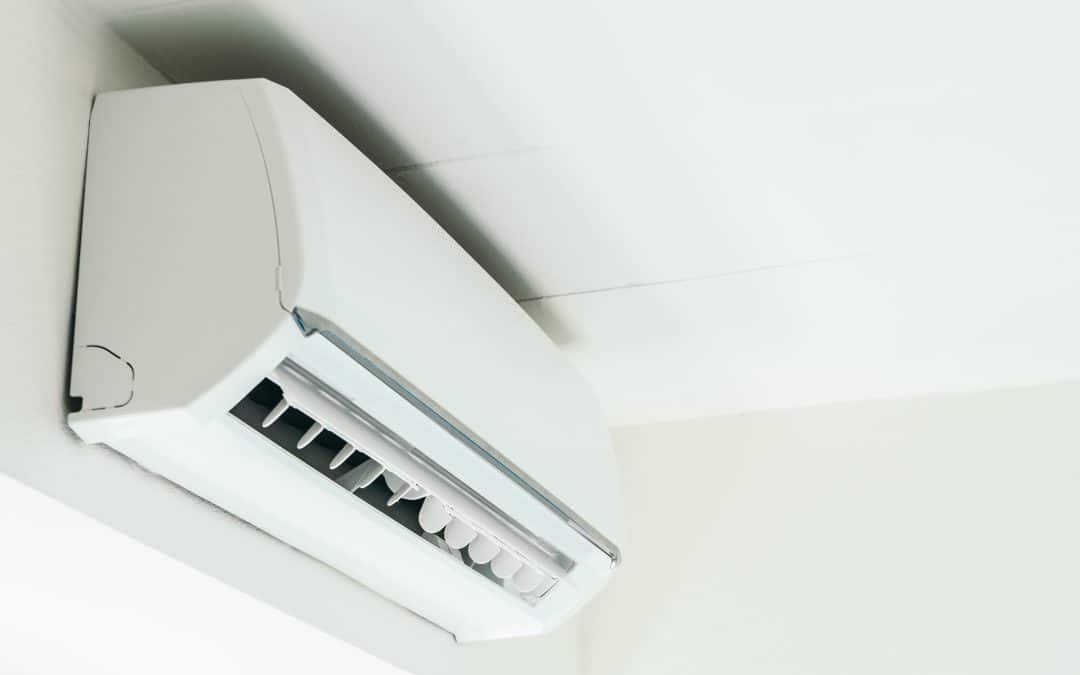
A mini split has an outdoor unit connected directly to one or more indoor air handlers mounted on the wall or ceiling. No ductwork is involved. Each indoor unit controls its own zone independently. You can have one unit cooling a single room or several units covering an entire house, each set to a different temperature.
Both systems cool effectively in Jacksonville’s climate. The right one depends entirely on your home’s layout, age, existing ductwork, and what you are trying to solve.
Mini Split vs Central AC by Jacksonville Home Scenario
Scenario 1: You Have Existing Ductwork in Good Condition
Central AC wins here, and it is not close. If your home already has ducts that are sealed, insulated, and in reasonable shape, replacing the central system with another central system makes far more financial sense than installing multiple mini split units to cover the same space. The upfront cost of mini splits to replace a whole-home central system is significantly higher, and the efficiency gains rarely justify the difference.
The key phrase is “good condition.” Leaky ducts running through a hot Jacksonville attic lose 20 to 30 percent of conditioned air before it reaches your living space, according to the U.S. Department of Energy. If your ductwork is old, leaking, or poorly insulated, duct sealing and repair may recover much of that lost efficiency before you consider replacing the system entirely.
Scenario 2: You Have an Older Home Without Existing Ductwork
Mini split wins here. Adding ductwork to a home that was never designed for it is expensive, invasive, and often disruptive to walls, ceilings, and in historic homes, architectural details that cannot easily be restored. Jacksonville has a large stock of older homes in neighborhoods like Riverside, Avondale, and San Marco that fall into this category.
A mini split installation in these homes requires nothing more than a small hole through the wall for the refrigerant line and electrical connection. The installation is fast, non-invasive, and far less expensive than running new ductwork. For older Jacksonville homes without ducts, mini splits are almost always the practical solution.
Scenario 3: You Are Adding a Room, Garage Conversion, or Sunroom
Mini split wins here too, and by a wide margin. Extending central ductwork to a new addition puts strain on a system that was sized for the original home. The existing system may not have the capacity to handle the additional square footage, and running new duct runs is expensive and often difficult depending on where the addition sits.
A single-zone mini split handles a new space independently without touching the existing system at all. Installation is straightforward, the cost is manageable, and the new room gets its own temperature control. This is the most common reason Jacksonville homeowners add a mini split to a home that already has central AC, and it works extremely well.
Scenario 4: You Are Building New Construction in Nocatee, St. Johns, or a New Development
Central AC is almost always the right choice for new construction with a full duct system designed and built correctly from the start. New ductwork installed properly in a conditioned or well-insulated space performs very differently from old leaky ducts in a 1970s attic. The efficiency argument for mini splits weakens significantly when the alternative is a well-installed modern central system with tight ductwork.
That said, some new construction homes in Jacksonville use a hybrid approach. Central AC covers the main living areas, and a mini split handles a bonus room, garage apartment, or in-law suite that sits outside the main duct system. That combination is increasingly common in larger new builds in St. Johns County.
Scenario 5: Humidity Control Is Your Main Problem
Mini splits have a real advantage here, and it matters more in Jacksonville than almost anywhere else in the country. Standard single-stage central AC systems run at full capacity, cool the house quickly, and shut off. Short cycles do not run long enough to pull substantial humidity out of the air. The result is a home that hits the target temperature but still feels clammy and uncomfortable.
Mini splits use variable-speed compressors that run at lower capacity for longer periods. That extended runtime removes far more moisture from the air. If your central AC keeps the temperature right but the house always feels sticky, a variable-speed mini split or a variable-speed central system addresses the root cause. For Jacksonville homeowners with persistent indoor humidity problems, this factor alone often drives the decision.
Cost Comparison for Jacksonville Homeowners
Cost varies significantly depending on the scope of work, but here are realistic ranges for Jacksonville installations:
- Single-zone mini split (one room or space): $1,500 to $3,500 installed
- Multi-zone mini split (whole home, 3 to 4 zones): $8,000 to $15,000 installed
- Central AC replacement (existing ductwork): $4,500 to $9,000 installed
- Central AC with new ductwork: $10,000 to $20,000 or more depending on home size
For a single room or addition, the mini split is clearly more affordable. For whole-home coverage in a home with good existing ductwork, central AC is typically more cost-effective. Use our HVAC cost calculator to get a Jacksonville-specific estimate before you start getting quotes.
Where Mini Splits Fall Short in Jacksonville
Mini splits are not the right answer for every situation. A few honest limitations worth knowing:
- Whole-home replacement cost. Replacing central AC with multiple mini split units across a large Jacksonville home typically costs more upfront than a central system replacement. The monthly energy savings rarely close that gap within a reasonable payback period for most homeowners.
- Aesthetics. Indoor wall-mounted units are visible in every room. Some homeowners are fine with this. Others find it disruptive to the look of the space. Central AC systems hide all components in the attic, closet, or garage.
- Salt air maintenance on the coast. Outdoor mini split units in Atlantic Beach, Neptune Beach, and Ponte Vedra face the same salt air corrosion issues as central AC condensers. Regular coil cleaning matters for both systems in coastal Jacksonville.
Get the Right System for Your Specific Home
Florida Air Flow installs and services both mini split systems and central AC across Jacksonville and Northeast Florida. We assess your home, tell you honestly which system makes sense for your situation, and give you upfront pricing before anything gets started. We do not push one system over the other when the other is the better fit for your home.
Contact Florida Air Flow or call (904) 982-9731. We are available 24/7 across Jacksonville, Atlantic Beach, Neptune Beach, Jacksonville Beach, Ponte Vedra, Nocatee, Orange Park, St. Augustine, and St. Johns.