
Knowing what to do when your AC goes out in summer starts with one thing. Take a breath. You walk in the door, the air feels thick, and the house is already warmer than it should be. That sinking feeling is real, and you are not alone with it.
The good news is simple. Many AC problems have a quick fix you can check yourself. The rest just need the right people on the way. This page walks you through both, step by step, so you can cool down and get help fast.
When My AC Goes Out in Summer, What Should I Check First?
Start with a few quick checks before you call anyone. Each one takes a minute or two. Often, one of them turns out to be the whole problem. Let us walk through them together, in order.
1. Check the thermostat. Make sure it is set to “cool,” not “heat” or “off.” Set the temperature a few degrees below the room. If the screen is blank, the batteries may be dead. Swap them and see if it wakes back up.
2. Check the breaker. A tripped breaker can shut your system down in seconds. Find the switch for your AC or air handler. If it sits between on and off, flip it fully off, then back on. If it trips again right away, stop there. That points to a deeper issue, and you can read why your AC keeps tripping the breaker next.
3. Check the air filter. A clogged filter chokes airflow and can freeze the system. If it looks gray and packed with dust, replace it. Keep a spare or two on hand all summer.
4. Check the drain line. This is the one most people miss, and it is a big one in Florida. Your AC pulls a lot of water out of our humid air. That water leaves through a white PVC pipe. Over time, algae and slime clog that pipe. When it backs up, a small safety switch shuts the whole system off on purpose. It does this to keep water from flooding your air handler.
Here is how to spot it. Look for standing water in the pan under your indoor unit. Check for a puddle or damp spot near the air handler, often in a closet, attic, or garage. If you find water, a clogged drain is the likely cause.
You can often clear it yourself. Find the end of the white PVC pipe outside, near the foundation. Hold a wet/dry vacuum to the opening and seal the gap with your hand or a rag. Run it for a minute to pull the clog out. Once a month, pour a cup of distilled vinegar into the drain access to slow the buildup. If clearing the line brings your system back, you just saved a service call. Our post on why your AC drain line keeps clogging covers it in more depth.
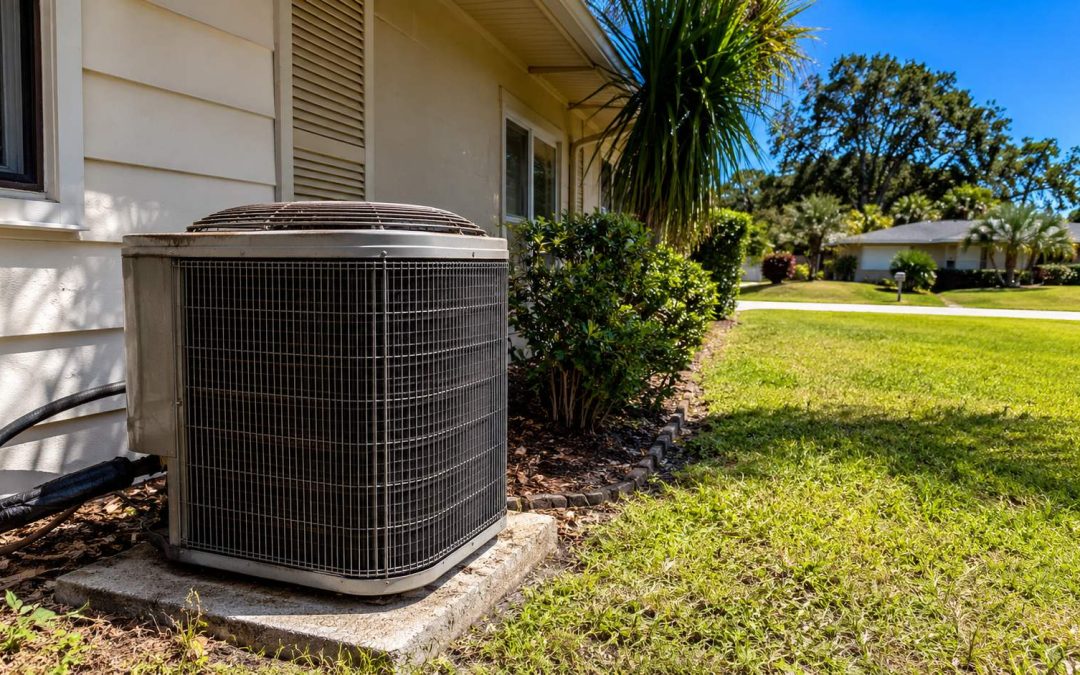
5. Check the outdoor unit. Step outside to the condenser, the big unit beside the house. Clear away leaves, grass, and debris. Give it about two feet of space on every side. If the fins look dirty, rinse them gently with a garden hose.
6. Look for ice. If you see frost on the copper lines or the indoor coil, turn the cooling off. Switch the thermostat to “fan only” and let it run. This thaws the ice, which can take a few hours. Running a frozen system can harm the compressor, and that repair gets pricey.
One Florida note on storms. After the power blips, many systems wait a few minutes before they restart. That short delay protects the compressor, so it is normal. Give it five minutes before you worry.
If the system runs but only blows warm air, the cause sits elsewhere. Here is why your AC blows hot air and what each sign means.
How Do I Stay Cool and Safe While I Wait?
While you wait for help, keeping your home and family cool comes first. Florida heat is not just uncomfortable. With our humidity, an indoor space can turn dangerous in a short time. So take these steps right away.
- Close the blinds and curtains on the sunny side of the house.
- Run ceiling fans and box fans to keep air moving over your skin.
- Shut doors to unused rooms so the fans cool a smaller space.
- Drink cool water often, even before you feel thirsty.
- Skip the oven and dryer, since they add a lot of heat.
- Open the windows in the evening once it cools off outside.
Now, watch the people who feel the heat the hardest. Older adults, young children, and anyone with a health condition face real risk when it gets this hot. The CDC names those same groups as most at risk and urges you to check on them often. Watch for heavy sweating, dizziness, headache, or nausea. If someone seems confused or stops sweating, call 911 right away.
When in doubt, move your loved ones somewhere cool. A family member’s home, a library, or a store all work for a few hours. Comfort matters, but safety comes first.
When Is a Broken AC an Emergency?
A broken AC becomes an emergency when the heat starts to put someone’s health at risk. In that case, you should not wait it out. Call for help fast if any of these are true.
- The indoor temperature keeps climbing past a safe level.
- Someone at home is elderly, very young, or unwell.
- You smell something burning or see water pooling inside.
- The unit keeps tripping the breaker after you reset it.
Summer is the busiest season for AC repair, and the schedule fills up quick. So the sooner you call, the sooner someone is on the way. Our 24/7 emergency AC service means you can reach a real person, day or night. For anything past a simple reset, professional AC repair is the safe path back to a cool home.
What Should I Tell You When I Call?
A few details help us help you faster, so gather these before you dial. They let the tech show up with the right parts and a head start.
- The age of your system, even a rough guess.
- What it is doing, like no power, warm air, or odd noises.
- Any smell, water, or ice you noticed.
- The steps above that you already tried.
- Whether anyone home is elderly, very young, or unwell.
That last point matters most. If someone is at risk in the heat, say so, and we will move you up the schedule. A clear picture on the phone often shaves real time off the visit.
Why Did My AC Go Out in the First Place?
Most summer breakdowns follow a pattern. Matching the symptom to the cause helps you know what to expect. Here is a quick guide.
- No power at all: often a tripped breaker, a blown fuse, or that drain safety switch.
- Outdoor fan hums but will not spin: usually a worn capacitor.
- Runs but blows warm air: low refrigerant, a frozen coil, or a dirty condenser.
- Turns on and off fast: could be the thermostat, poor airflow, or a sizing issue.
- Puddle inside or a musty smell: points back to the drain line.
If the fan hums but will not turn, our post on how to tell if your capacitor is bad shows the signs. If there is no power at all, here is how to tell if your AC fuse is blown. Knowing the likely cause saves you time and worry.
Regular tune-ups catch most of these before summer hits. A little care in the spring prevents the worst timing later. Still, even a well-kept system can quit on a brutal day, so keep this page handy.
We Are Here When Your AC Goes Out in Summer
When your AC goes out in summer, you should not have to face the heat alone. We know how stressful a hot house feels, especially with little ones or older parents at home. That worry is the part people rarely say out loud, and we get it.
Our team lives and works right here in Northeast Florida. We answer the phone, we show up, and we get your home comfortable again. You will talk to real neighbors who treat your home like their own.
Call or text us anytime at (904) 982-9731, or reach out through our contact page. Tell us what is going on, and we will get someone to you as fast as we can.