
If your AC is running but your home is not getting cool, you are probably asking yourself the same question a lot of Jacksonville homeowners ask before summer hits: is my AC leaking refrigerant? It is a reasonable thing to wonder, because a refrigerant leak is one of the most common reasons a system stops doing its job. The good news is that you do not need any tools or technical knowledge to spot the signs. Here is exactly what to look for, what it means, and what to do next.
Why Refrigerant Leaks Happen in the First Place
Your AC does not burn through refrigerant the way a car burns gas. It cycles the same refrigerant over and over to pull heat out of your home and push it outside. If the level is low, refrigerant is escaping somewhere in the system. It does not just disappear on its own.
Most leaks develop slowly from wear, vibration, and corrosion over time. In Jacksonville specifically, the coastal salt air speeds up corrosion on coils and refrigerant lines faster than homes even a short distance inland would experience. That is one reason refrigerant leaks show up earlier in the lifespan of Jacksonville HVAC systems compared to systems in other parts of Florida. This regional pattern is why catching the signs early matters more here than in most places.
6 Signs Your AC Has a Refrigerant Leak
Walk through these six signs one at a time. If more than one applies to your system, a refrigerant leak becomes significantly more likely.
Sign 1: Your Home Has Stopped Cooling Down
This is the first thing most Jacksonville homeowners notice. The system is running. You can hear it, and you can feel air coming from the vents. But the house stays warm and stuffy no matter how long it runs. Low refrigerant limits how much heat the system can absorb from the indoor air. As a result, the AC works hard but cannot keep pace with the heat, especially on a typical Jacksonville summer afternoon when temperatures push into the 90s.
If your thermostat has been set the same way for years and your home suddenly cannot reach that temperature, that shift is worth paying attention to.
Sign 2: Ice Is Forming on the Refrigerant Lines or Indoor Unit
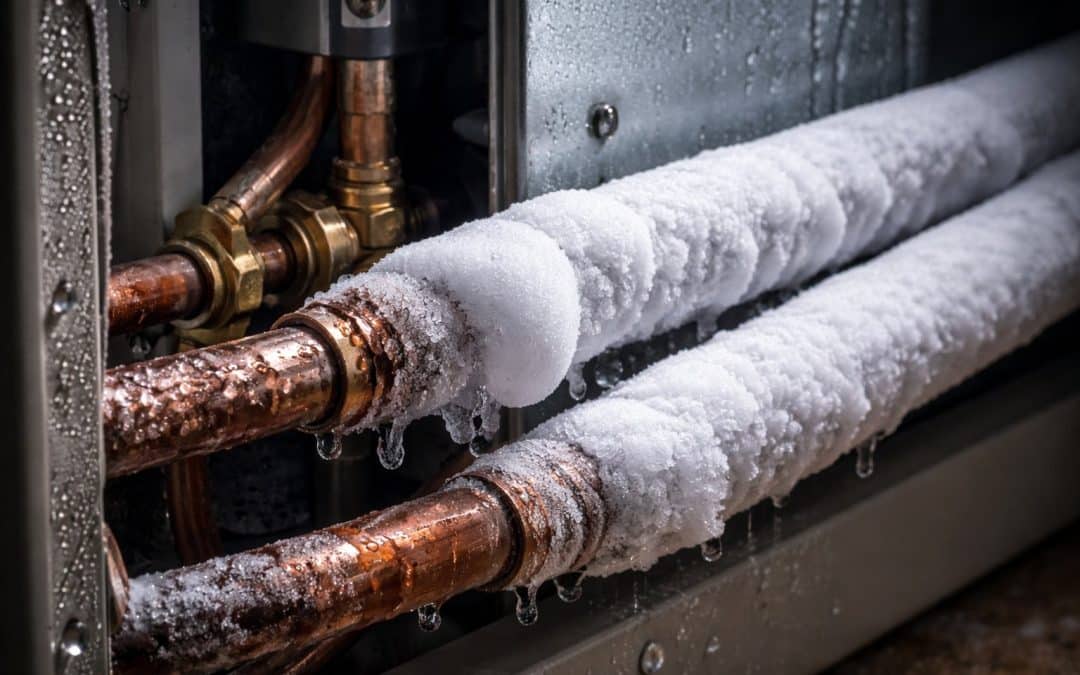
Take a look at the copper lines running from your outdoor unit and at the indoor air handler. Check for ice or frost, even in the middle of summer. It is one of the clearest signs of a refrigerant leak. When refrigerant levels drop, the remaining refrigerant over-expands inside the coil. The temperature drops below the dew point, and moisture in the air freezes right on contact with the coil or lines.
If you see ice, turn the system off at the thermostat right away. Do not just flip it to fan mode. Shut it down. Running the system with a frozen coil causes damage beyond the refrigerant leak itself. Then call a technician to find the source before turning the system back on.
Sign 3: You Hear a Hissing or Bubbling Sound Near the Unit
A hissing sound near the indoor or outdoor unit means refrigerant is forcing its way out through a crack or hole under pressure. A bubbling or gurgling sound points to air entering the refrigerant line at the point where the leak is occurring. Neither sound is normal. Neither should be ignored or chalked up to the system “just being loud.” Both are worth a same-day call.
Sign 4: The Air Coming From Your Vents Feels Warm
Put your hand near a vent while the system is running. If the air feels warm, room temperature, or only mildly cool instead of cold, low refrigerant is one of the most likely explanations. Without enough refrigerant, the system cannot complete the heat exchange cycle the way it was designed to. The air moves through the system but never gets cold enough to do anything useful by the time it reaches your vents.
This sign often goes unnoticed at first because the air is technically moving, so the system feels like it is working. The cooling just is not there.
Sign 5: Your Energy Bills Have Gone Up Without Explanation
A refrigerant leak forces your AC to run longer cycles to try to hit your thermostat setting. Longer cycles mean more electricity. Maybe your utility bill jumped while nothing else changed. Same habits, same thermostat setting, same number of people at home. A refrigerant leak is a reasonable suspect.
This is especially common in spring when Jacksonville homeowners turn the AC back on after winter and do not immediately realize the system has developed a leak over the cooler months. The first high bill of the season is often the first real signal that something is wrong.
Sign 6: You Notice Oily Residue or Moisture Around the Unit
Refrigerant travels through the system mixed with compressor oil. When refrigerant leaks out, it takes that oil with it. Check the copper lines and around the indoor air handler for oily staining or residue. Also look for water pooling on the floor around the indoor unit. That water is usually ice that formed on the coil and melted after the system shut off.
Oily residue on its own is a meaningful clue. Water pooling combined with any of the other signs above makes a refrigerant leak much more likely than a simple condensate drain issue.
Is It Safe to Keep Running the AC?
No. This is the part that catches a lot of homeowners off guard. The compressor relies on refrigerant returning through the system to stay lubricated and at a safe operating temperature. When refrigerant levels drop, the compressor works harder, runs hotter, and wears out faster. A small refrigerant leak that gets repaired early might cost a few hundred dollars. The same leak left running until the compressor fails can cost $1,500 to $2,500 or more, and in some cases makes replacement the only practical option.
Turn the system off at the thermostat as soon as you suspect a leak. Do not override it, do not run it on fan only, and do not wait to see if it improves. The longer it runs, the more expensive the outcome.
What to Do After You Spot the Signs
There are three things homeowners commonly try that make the situation worse, not better.
- Do not keep running the system. Every additional hour the AC runs with low refrigerant adds wear to the compressor. Once that component fails, a manageable repair becomes a major job.
- Do not just add refrigerant. Topping off the refrigerant without finding and fixing the leak is a temporary patch. The EPA advises homeowners to ask their technician to locate and repair the leak rather than simply recharge the system. Adding refrigerant without fixing the source means the same problem comes back in weeks or months, and you pay for refrigerant again.
- Do not attempt to handle refrigerant yourself. Refrigerant is a regulated substance under the Clean Air Act. Only EPA-certified technicians are legally permitted to handle, recover, and recharge refrigerants. It is not a DIY repair.
The right move is to shut the system off, then call a certified technician who can locate the source, repair it, and recharge the system properly. Florida Air Flow’s certified technicians handle AC leak repair across Jacksonville and the surrounding areas, including Ponte Vedra, St Johns, Orange Park, Atlantic Beach, Fernandina Beach, St Augustine, and Nocatee. We are available 24/7 for situations that cannot wait.
What the Repair Process Actually Looks Like
Understanding the process makes it easier to know what to expect when a technician arrives.
The first step is locating the exact source. Common leak points include the evaporator coil, condenser coil, refrigerant lines, and service valves. Technicians use electronic leak detectors and UV dye to pinpoint the location. These are tools homeowners cannot safely use on their own.
Once the source is confirmed, the technician repairs it. Depending on the location and severity, that might mean soldering a crack in the coil, replacing a section of refrigerant line, or tightening a valve connection. The system is then tested to confirm the leak is fully sealed before any refrigerant gets added back.
The final step is recharging the system with the correct type and amount of refrigerant for your specific unit. A system that is properly repaired and recharged should hold that level indefinitely. If a new leak develops later, it will be at a different point in the system.
Can You Prevent a Refrigerant Leak?
Not entirely, but regular maintenance cuts the risk significantly. An annual HVAC tune-up before summer gives a technician the chance to spot early corrosion on coils or fittings before it becomes a full leak. Catching it at that stage costs a fraction of what a refrigerant leak repair costs after the fact, and a fraction of what compressor damage costs if the leak runs unchecked.
Keeping your outdoor unit free of debris, replacing your air filter regularly, and not blocking return air vents all reduce the wear and strain that eventually leads to leaks over time.
Spotted the Signs? Call Florida Air Flow.
If any of the six signs above match what you are seeing in your home right now, do not wait. Florida Air Flow provides fast, professional AC refrigerant leak repair across Jacksonville and surrounding areas. Our certified technicians locate the leak, fix it at the source, and recharge your system. No guesswork, no temporary patches, no surprise charges.
We are available 24/7 for emergency calls. Contact Florida Air Flow today.