
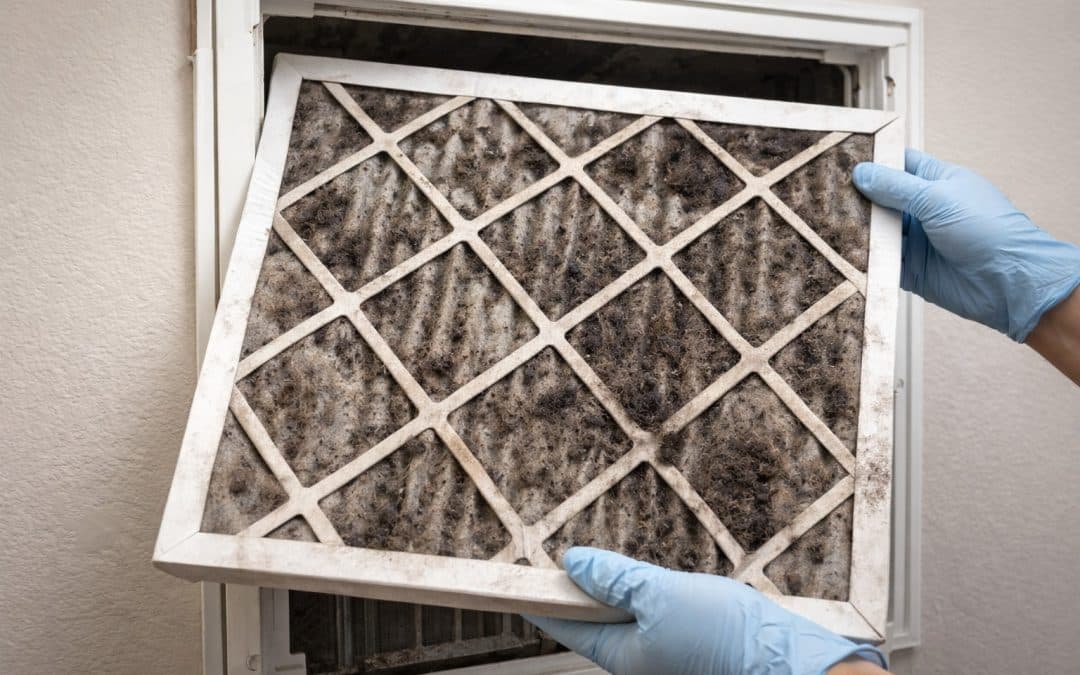
Black mold on an air filter is a serious warning sign that your home has a moisture problem inside your HVAC system. It does not necessarily mean your entire home is contaminated, but it does mean something is wrong that you need to fix right away. The longer you wait, the more likely the mold has spread beyond the filter and into your ducts or air handler.
Here is what causes it, whether it is dangerous, and exactly what to do next.
Is That Actually Black Mold on Your Air Filter?
Not everything dark on a filter is mold. Filters naturally trap dust and debris over time, and they turn gray or black just from regular use. So first, confirm what you are dealing with.
Here is how to tell the difference:
- Dust buildup looks flat and even across the filter surface. It has no texture and no smell.
- Black mold on an air filter looks fuzzy or spotty. It appears in clusters, often in uneven patches. It may smell musty or earthy.
If you are not sure, treat it like mold. Taking it seriously when it is just dust costs you nothing. Ignoring real mold can cost you a lot.
Why Does Black Mold Grow on Air Filters in Florida?
Mold needs two things to grow: moisture and something to feed on. Your air filter sits inside a dark air handler, pulling in warm, humid Florida air all day long. That environment checks every box for mold growth.
Here are the most common reasons black mold shows up on filters in Florida homes.
High Indoor Humidity
Florida humidity is relentless. When indoor humidity stays above 60 percent consistently, mold can grow almost anywhere inside your home, including your HVAC system. If your AC is not properly removing moisture from the air, your filter becomes a breeding ground.
A Clogged Condensate Drain
Your AC pulls moisture from the air and drains it out through a condensate line. When that line gets clogged, water backs up and pools inside your air handler, right next to your filter. Standing water in a dark, enclosed space is a perfect environment for mold. This is one of the most common causes of mold in Florida HVAC systems.
An Oversized AC System
This one surprises most homeowners. An AC unit that is too big for your home cools the air too quickly before completing a full dehumidification cycle. The temperature drops, but the air stays damp. Therefore, your filter ends up sitting in humid air even when your system is keeping your home cool.
Leaving a Dirty Filter in Too Long
The longer a filter sits in place, the more organic material it collects. Dust, pollen, and pet dander all feed mold spores. In Florida’s humid climate, filters left in place for two or more months are at high risk of developing mold growth.
Is Black Mold on an Air Filter Dangerous?
It can be, especially for people with allergies, asthma, or weakened immune systems. Every time your AC runs with a mold-contaminated filter, spores circulate through your home. For most people, this causes symptoms that feel like allergies: sneezing, runny nose, itchy eyes, and headaches. For vulnerable people, the effects can be more serious.
However, the bigger concern is whether the mold has spread beyond the filter. According to the EPA’s guide on mold and moisture, mold inside HVAC systems can spread throughout a building when the system runs. A moldy filter is often just the visible sign of a larger problem already developing inside your ducts or air handler.
What To Do Immediately If You Find Black Mold on Your Air Filter
Take these steps right away. Do not keep running your system with a moldy filter in place.
Step 1: Turn Off Your HVAC System
Stop the system immediately. Running it with a mold-contaminated filter spreads spores through every vent in your home. Turn it off until you complete the next steps.
Step 2: Remove and Bag the Filter
Do not try to clean and reuse a moldy filter. Wear gloves, place the filter directly into a plastic bag, seal it, and throw it away. Wash your hands thoroughly afterward.
Step 3: Install a Fresh Filter
Put in a new filter before restarting your system. Use a MERV 8 or higher rated filter. A better filter captures more mold spores and other particles that lower-rated filters miss.
Step 4: Check Your Condensate Drain Line
Look near your air handler for any signs of standing water or water stains around the drain pan. A full drain pan means your condensate line is clogged. This needs to be cleared by a technician before mold comes back.
Step 5: Check Your Indoor Humidity
Pick up an inexpensive humidity gauge at any hardware store. Your indoor humidity should stay between 40 and 55 percent. If it is consistently above 60, your AC may not be controlling moisture effectively, or you may need a whole-home dehumidifier.
Step 6: Get a Full System Inspection
This is the most important step. A moldy filter often means mold has already spread to your evaporator coil or ductwork. Our indoor air quality inspection service covers your full system, including coil cleaning, drain line clearing, and testing for mold contamination in your ducts. If mold has reached your ductwork, professional air duct cleaning removes it at the source.
Will the Mold Come Back After You Change the Filter?
Yes, if you do not fix the underlying moisture problem. A lot of homeowners swap the filter and move on. Then they find mold on the next one too. And the one after that.
Black mold on an air filter is a symptom, not the root cause. The root cause is excess moisture inside your system. Until you fix that, the mold will keep coming back. In addition, each time mold grows on your filter, more spores circulate through your home’s air.
How To Prevent Black Mold on Your Air Filter Going Forward
Here are the most effective ways to stop mold from returning:
- Change your filter every 30 days, especially if you have pets or allergies
- Keep indoor humidity between 40 and 55 percent year-round
- Have your condensate drain line flushed at every maintenance visit
- Schedule annual HVAC tune-ups to keep your coils clean and your system dehumidifying properly
- Consider a whole-home dehumidifier if your home consistently runs above 60 percent humidity
Florida homes need active moisture management. Your AC alone cannot always keep humidity in check, especially during mild weather when it does not run as often.
Call Florida Air Flow If You Found Mold on Your Filter
Do not just replace the filter and hope the problem goes away. Florida Air Flow can inspect your full system, clear your condensate drain, clean your evaporator coil, and test your indoor air quality throughout Jacksonville, Ponte Vedra, St. Johns, Orange Park, Atlantic Beach, Fernandina Beach, Nocatee, and St. Augustine.
Contact Florida Air Flow today or call (904) 982-9731. We offer same-day appointments and will give you honest answers about what is happening in your home’s air. No upsells, no runaround.