
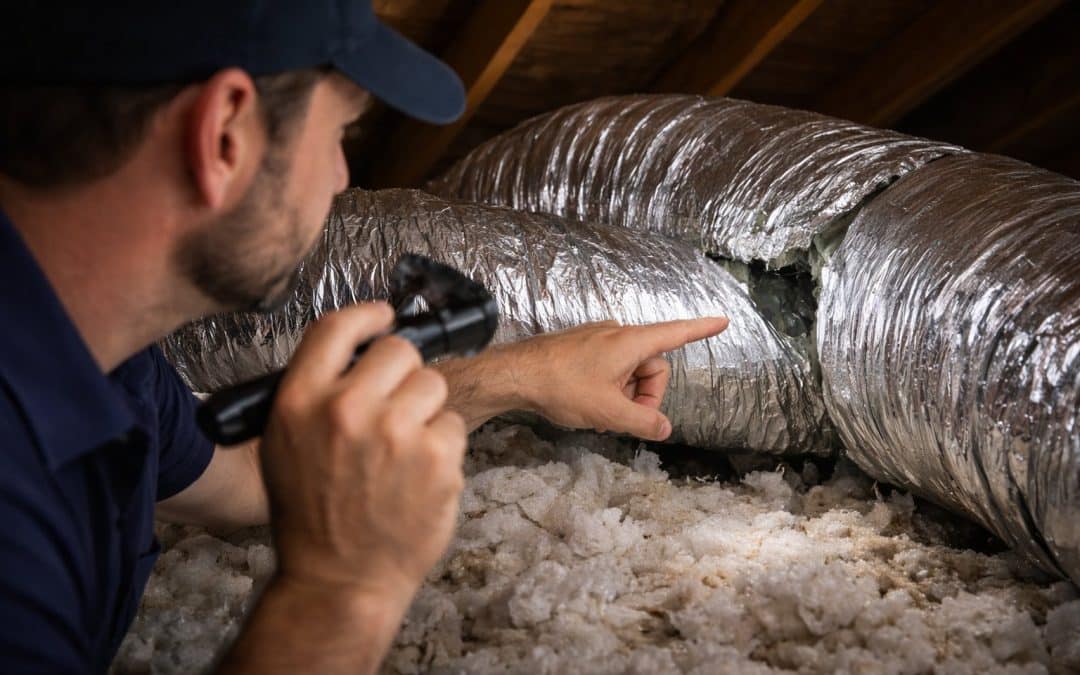
Knowing how to check ductwork for leaks can save Jacksonville homeowners hundreds of dollars every year. According to ENERGY STAR, a typical home loses 20 to 30 percent of conditioned air through leaky ducts — meaning your AC could be working hard to cool your attic instead of your living room. The good news is that many duct leaks show clear warning signs you can spot yourself before calling a professional.
What Are Ductwork Leaks and Why Do They Matter in Florida?
Your ductwork is the network of tubes that carries cooled air from your HVAC system to every room in your home. When ducts develop holes, tears, or loose connections, that conditioned air escapes before it reaches its destination. In Jacksonville, where the AC runs nearly eight months of the year, even a small duct leak adds up to significant energy waste and higher monthly bills.
Florida homes face a unique challenge. Most ductwork runs through attics, and Jacksonville attics can reach temperatures of 130 degrees or more in summer. When cooled air leaks into that superheated space instead of reaching your living areas, your system has to work significantly harder to keep up. Furthermore, leaky return ducts pull that hot attic air back into the system, making the problem even worse.
Signs You May Have Leaky Ductwork
Before you physically check ductwork for leaks, your home gives you several warning signs that something is wrong. Look for these first.
Rooms That Never Cool Properly
If certain rooms are always warmer than the rest of the house no matter how long the AC runs, leaky ducts are one of the most likely causes. Conditioned air is escaping before it reaches those rooms. This is especially common in rooms at the end of long duct runs or rooms above the garage.
Higher Than Normal Energy Bills
A sudden or gradual increase in your energy bills without a change in habits or thermostat settings is a strong indicator of duct leaks. Your system runs longer cycles to compensate for the lost air, using more electricity in the process. In Jacksonville’s long cooling season, that extra runtime adds up fast.
Excessive Dust Throughout the Home
Leaky return ducts pull air from unconditioned spaces like attics and crawlspaces directly into your system. That air carries dust, insulation particles, and other debris that then gets distributed throughout your home. If surfaces seem to collect dust faster than they should, your ductwork may be pulling in air from places it should not.
Humidity Problems
Jacksonville is already one of the most humid cities in the country. Leaky ducts make the problem worse by pulling in warm, moist attic air and circulating it through your home. If your home feels stickier than usual even with the AC running, duct leaks could be contributing to the moisture problem.
Your AC Runs Constantly
A system that runs for long stretches without reaching the thermostat setpoint is often compensating for air lost through duct leaks. The system is producing the right amount of cooled air — it is just not making it to the right places. Consequently, the system keeps running trying to catch up.
How to Check Ductwork for Leaks Yourself
You can inspect the ductwork you have access to without any special equipment. Most Jacksonville homes have exposed ductwork in the attic and sometimes in utility closets or garages. Here is how to do a basic inspection.
Step 1: Turn the System On
Turn your AC on and set it to fan mode or a cooling cycle so air is actively moving through the ducts. This makes leaks much easier to find since you can feel and hear air escaping. Set the fan to high for the best results.
Step 2: Visually Inspect All Accessible Ductwork
Go to your attic, utility closet, or any space where ducts are visible. Look carefully at each section and every connection point. Specifically look for:
- Visible holes, tears, or gaps in the duct material
- Sections of duct that have pulled apart at connection points
- Old duct tape that has dried out, cracked, or peeled away
- Discolored or stained insulation around duct joints, which indicates air has been escaping
- Flexible duct sections that are kinked, crushed, or sagging
Step 3: Feel for Escaping Air
Run your hand slowly along duct seams and connection joints while the system is running. If you feel air against your hand, that connection is leaking. Pay extra attention to where ducts connect to each other, where they connect to vents and registers, and where they attach to the air handler unit.
Step 4: Use the Smoke or Tissue Test
For smaller leaks you cannot feel with your hand, hold a lit incense stick or a thin piece of tissue paper near duct joints. If the smoke wavers or the tissue moves toward or away from the duct, air is escaping from that spot. Mark any problem areas with a grease pencil so you can find them again during repairs.
Step 5: Check Your Vents and Registers
Walk through your home and hold your hand over each supply vent while the system is running. Weak airflow from certain vents compared to others points to leaks somewhere in that duct run. Also check where vents meet the wall, floor, or ceiling — gaps around register boots are a common and often overlooked source of duct leakage.
What You Cannot Check Yourself
A DIY inspection only covers ductwork you can physically access. In most Jacksonville homes, a significant portion of the duct system runs through walls and ceilings where you cannot see or feel it. Hidden leaks in these areas require professional diagnostic tools to find.
A certified HVAC technician can perform a duct pressure test, also called a duct blaster test, which measures exactly how much air your duct system is leaking and where the leaks are concentrated. This test finds problems that a visual inspection will always miss and gives you a precise picture of how your duct system is actually performing.
What to Do After You Find Duct Leaks
If you find obvious leaks in accessible ductwork, there are some temporary fixes you can apply yourself. Use mastic sealant or metal foil tape — not regular duct tape, which dries out and fails quickly — to seal small gaps and holes you can reach. This can help in the short term but is not a substitute for a professional inspection and repair.
For anything beyond minor visible leaks, professional duct sealing is the right call. A technician can seal both accessible and hidden leaks using specialized methods and materials that last far longer than any DIY fix. They can also identify whether your ductwork has bigger structural issues like disconnected sections or collapsed flexible ducts that need replacement rather than just sealing.
Florida Air Flow provides professional duct inspection and leak repair services across Jacksonville and surrounding areas. If you suspect your ductwork is costing you money, our team can diagnose the issue and give you honest options for fixing it. Visit our air duct services page to learn more about what we cover.
How Much Can Fixing Duct Leaks Save You?
The savings depend on how severe the leaks are and how long your system runs. In Jacksonville where the AC operates nearly year-round, the impact of duct leaks on energy costs is higher than in most other parts of the country. Homes with significant duct leakage can see meaningful reductions in monthly energy bills after professional sealing — often enough to make the repair pay for itself within a season or two.
Beyond the energy savings, sealed ductwork means more consistent temperatures throughout your home, better indoor air quality, and less strain on your HVAC system. All of those benefits extend the life of your equipment and reduce the likelihood of unexpected breakdowns during the hottest months of the year.
Schedule a Duct Inspection With Florida Air Flow
If your home shows any of the signs above — uneven cooling, higher bills, excess dust, or humidity issues — your ductwork is worth a closer look. A professional inspection will tell you exactly what is happening and what it will take to fix it.
Florida Air Flow serves Jacksonville, Ponte Vedra, St Johns, Orange Park, Atlantic Beach, Fernandina Beach, St Augustine, Nocatee, and surrounding areas. We offer duct inspections, duct sealing, and full duct repair services with upfront pricing and no surprises.
Contact Florida Air Flow today to schedule your duct inspection. Call us anytime at (904) 982-9731 — we are available 24/7.