
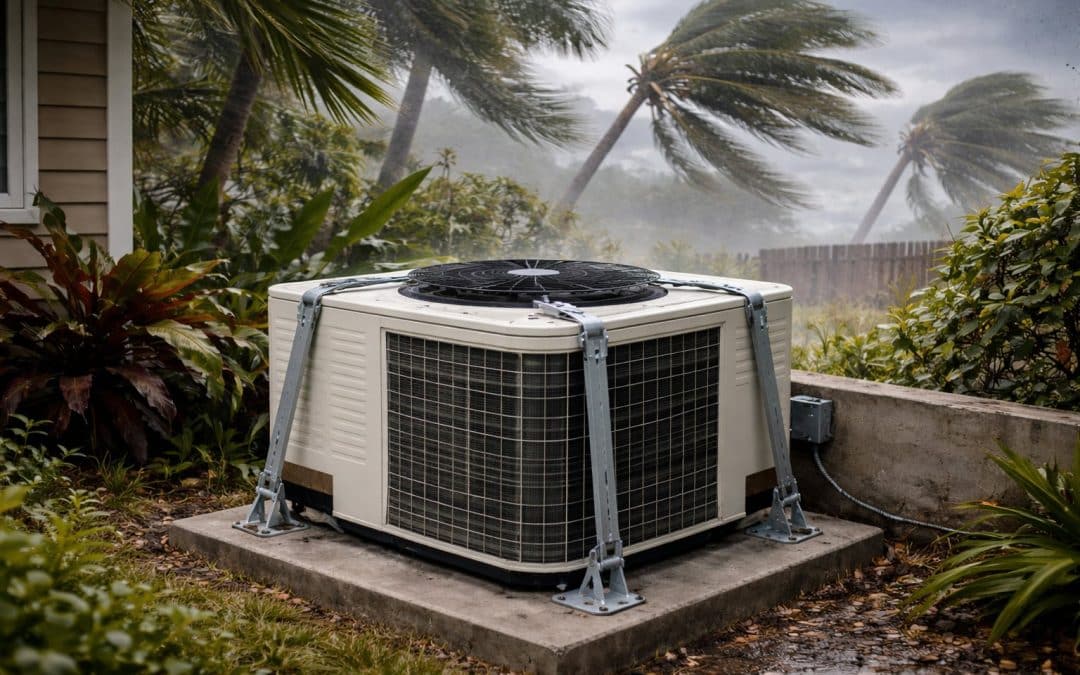
A hurricane AC system is one that can survive Florida’s worst storms with little or no damage. Most homeowners don’t have one. They have a regular AC unit sitting on a slab with no straps, no surge protection, and branches hanging over it. That unit is a storm loss waiting to happen. This guide shows you how to turn your regular AC into a hurricane-ready AC system before June 1 — plus exactly what to do before, during, and after a storm to keep it safe.
June 1 is the official start of hurricane season. Here in Northeast Florida, most real storm risk hits from August through October. That gives you time to get ready — but only if you start now.
What Makes a Hurricane AC System Different?
A true hurricane AC system has four things a basic install does not. First, it’s bolted down with code-approved hurricane straps that can hold up to 150 mph winds. Second, it has a whole-house surge protector wired into the panel. Third, it sits on a raised pad if the home is in a flood zone. Fourth, it has a protective coating on the coils to fight salt air and storm debris.
Most Jacksonville homes are missing at least two of these. That’s fine in calm weather. But a single named storm can cost you thousands if your system is not set up right. A new AC install in Jacksonville runs $5,850 to $11,000 or more. Filing an insurance claim means weeks without cool air during Florida’s hottest months. Stopping the damage up front is always cheaper and faster.
The 3 Biggest Threats Your Outdoor Unit Faces
Your outdoor unit sits out in the weather all year. During a storm, it faces three big threats at once.
- Flying debris. High winds turn yard junk into missiles. Those can bend fins, snap fan blades, or crush the whole unit.
- Flood water. Heavy rain and storm surge can flood the unit and ruin its wiring.
- Power surges. Downed lines send surges through the grid that fry the compressor the moment power comes back on.
A hurricane AC system is built to shrug off all three. A regular system often cannot.
Pre-Season Checklist: What to Do Before June 1
Start these tasks in May or early June. They take one weekend. Most cost little or nothing.
- Book a pro tune-up. A tech will find loose bolts, worn parts, and weak capacitors before a storm does. We offer this tune-up for $69.50.
- Clear debris around your outdoor unit. Rake leaves. Trim branches back at least 3 feet from the unit. Remove anything loose within 20 feet that could fly.
- Take photos of your unit. Shoot from every angle. Include the data plate with the model number. These photos become your insurance evidence later.
- Find your breaker. Know which breaker controls the AC so you can cut power fast when a storm is on the way.
- Buy hurricane straps. These metal straps bolt your unit to the slab. They stop the unit from tipping or sliding in high winds.
- Check your surge protection. A whole-house surge protector costs a few hundred dollars. It can save you thousands in storm damage.
What to Do When a Hurricane Watch Is Issued
A hurricane watch means storm conditions may hit within 48 hours. Now your real prep starts.
First, turn off the AC at the thermostat and at the breaker. Running the system during a storm invites surge damage. Second, cover your outdoor unit with a breathable tarp or a proper AC cover. Use bungee cords to hold it in place. Skip plastic covers. Plastic traps moisture and causes more damage than it prevents. Third, bring all outdoor furniture, grills, and planters inside. Anything left outside becomes a missile in 80 mph winds.
Next, fill your fridge and charge every device you own. If the storm knocks out power for a day or more, you want to save your food and keep your phone working. Finally, check your evacuation zone. Florida updates these zones every year. You can look yours up at ready.gov/hurricanes.
During the Storm: What NOT to Do
The biggest mistake Florida homeowners make? Trying to run the AC during a storm to stay cool. Don’t. Every nearby lightning strike sends a surge through the grid. That surge can fry your compressor. A few hours of cool air is never worth the risk.
- Do not run your AC once the storm hits. Keep it off at the breaker until the storm passes.
- Do not go outside to check your unit during the storm. Wait until winds drop below 30 mph.
- Do not try any repairs with water near the unit.
After the Storm: How to Restart Your Unit Safely
Once the storm passes and it’s safe to go outside, start with a careful look around. Check for clear damage first — a tipped unit, bent fins, broken fan blades, or water inside the cabinet. Don’t touch anything wired up if water is around it.
If the unit looks fine, wait at least 30 minutes after power returns before turning it on. Power grids often cycle up and down as crews work. Those jolts can wreck a compressor that kicks on too fast.
Here’s what to do next:
- Pull off any covers or tarps before you turn the power on. Running an AC with its cover on wrecks the compressor in minutes.
- Check for debris inside the unit. Pine needles, leaves, and bits of screen often get sucked into the coils during high winds.
- Look at the refrigerant lines. If the copper lines are bent, kinked, or pulled apart, call a tech before you turn the system on.
- Flip the breaker back on first. Wait 15 minutes. Then set the thermostat to cool and listen close. Grinding, clicking, or humming without starting means something is wrong.
- Call for service if your AC won’t start, cycles on and off fast, or blows warm air. These are classic post-storm failure signs.
If you need emergency help after a storm, our AC repair team answers calls 24/7 across Jacksonville and the beaches.
Extra Steps for Coastal Homes
Salt air and storm surge create extra risks for coastal homes. If you live in Atlantic Beach, Neptune Beach, Jacksonville Beach, or Ponte Vedra, take these extra steps:
- Rinse your outdoor unit with fresh water once a month during storm season. Salt eats metal fast after every storm.
- Think about a coastal AC cover built for salt air.
- Raise your unit’s pad if you live in a flood zone. Even 6 extra inches can stop flood damage.
- Ask about a coastal coating during your next tune-up. These coatings add years to your system’s life near the ocean.
When Should You Call for Help?
Some problems you can handle yourself. Others need a licensed tech right away. Call for service if:
- Your unit is tipped over, under water, or clearly damaged.
- You smell burning, see smoke, or hear popping when power comes back.
- The system runs but won’t cool the house 12 hours after the storm.
- Water got inside the air handler or ducts.
- Your breaker trips every time you turn the AC on.
Make Your AC Hurricane-Ready Before June 1
The best storm prep is a system that’s already running strong. A tune-up catches weak parts before Mother Nature does. At Florida Air Flow, we’ve kept Jacksonville families cool through many hurricane seasons. Our techs know what to check on every major brand. And we’re on call 24/7 when storms hit.
Don’t wait until the first named storm shows up on your phone. Contact our team today to book your pre-season tune-up before June 1.