
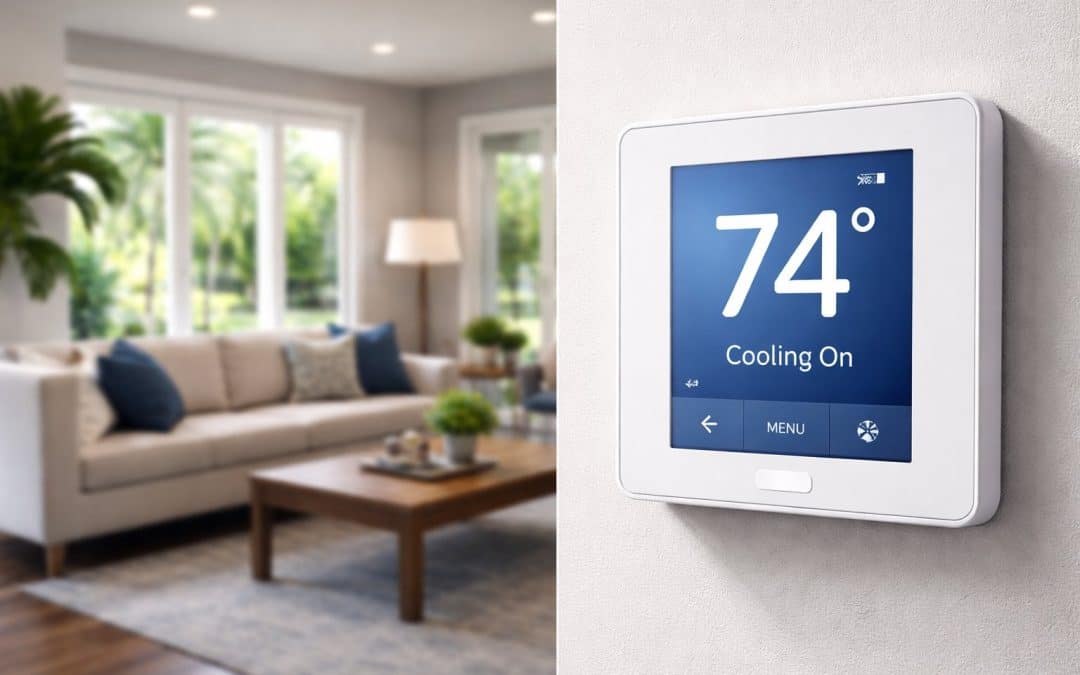
A short cycle HVAC system is one of the most frustrating AC problems. Your AC kicks on, runs briefly, shuts off, and starts again. The house never feels cool. Humidity never drops. Your electric bill climbs every month. And short cycling slowly kills your compressor, the most costly part of your system. Here’s what’s happening and how to fix it.
How to Tell If Your AC Is Short Cycling
A healthy AC runs in steady 15 to 20 minute cycles. It cools your home evenly. It also pulls humidity out of the air. A short cycle HVAC system does the opposite. It turns on, runs for 3 to 7 minutes, shuts off, and restarts soon after. Sometimes it cycles 5 or 6 times an hour.
The easy test: stand near your outdoor unit and time the cycles. Kicks on and off more than 3 times per hour? You have a short cycle HVAC problem.
Short cycling creates four big issues:
- Poor cooling. The system never runs long enough to cool your home.
- High humidity. Short cycles don’t dry the air. Your house feels clammy even at 74°F.
- High energy bills. ACs use the most power at startup. Frequent restarts burn power fast.
- Compressor wear. Every startup stresses the compressor. A short cycling system can kill one in 2 to 3 years. The normal life is 12 to 15.
The 6 Most Common Causes Behind the Problem
1. The AC is too big for your home
This is the #1 cause in Jacksonville. Most homeowners have no idea. An oversized AC cools your home too fast. It shuts off before a full cycle. Then it kicks back on, cools too fast again, and the loop repeats.
Florida has a major oversizing problem. Many contractors skip the proper load test (called Manual J). They just install whatever fit the last house. The result: thousands of Jacksonville homes running short cycle HVAC systems from day one. The only real fix is a new, right-sized unit.
2. A clogged air filter
A dirty filter blocks airflow across the evaporator coil. As a result, the coil gets too cold and freezes. The system then shuts down to protect itself. Once it thaws, it starts again. Then it freezes again. Rinse and repeat.
Fortunately, this is the cheapest fix on the list. Replace your filter. In Florida, that means every 30 days during cooling season.
3. Low refrigerant from a leak
Refrigerant runs in a closed loop. Your AC should never need a top-off. So if it’s low, there’s a leak. Low refrigerant drops system pressure. That trips a safety switch. The switch shuts down the compressor. Then pressure equalizes and it starts again. Classic short cycle HVAC pattern.
Refrigerant work requires a license. Call a pro.
4. A bad thermostat
Sometimes the problem isn’t the AC. A broken thermostat sends mixed signals. Or the thermostat is in the wrong spot. If it sits near a sunny window, a heat vent, or a lamp, it reads the wrong temperature. Then it tells the AC to cycle on and off wrong.
You can move the thermostat or replace it. A good tech can do either in under an hour.
5. Frozen evaporator coil
In addition to dirty filters and low refrigerant, blocked vents or weak airflow can freeze the coil. Once it’s frozen, the system can’t move heat. So it shuts down. Then it thaws, runs briefly, and freezes again. The cycle keeps going until a pro fixes the root cause.
6. Leaky or disconnected ductwork
Leaky ducts dump your cool air into the attic. Your rooms never reach the set temp. But the area near the thermostat might. So the system cycles off too early. Florida attics hit 140°F in summer. That makes leaky ducts brutally costly. We cover this in our ductwork and duct cleaning service page.
Why Jacksonville Homes See This More Often
Three reasons Florida homes short cycle more than homes up north.
First, oversizing is rampant. Many Florida contractors quote by square footage alone. A proper Manual J load test checks insulation, window exposure, ceiling height, and dozens of other factors. Skip it and homes end up with 4-ton units when they needed 2.5. Instant short cycle HVAC system.
Second, our humidity demands long cycles. Florida ACs must run long enough to pull moisture out of the air. A short cycle HVAC system in Jacksonville can leave your home at 74°F but 70% humidity. That feels worse than 78°F at 50%.
Third, our systems run 9 months a year. That constant runtime means small issues show up fast. A dirty filter or minor leak acts up faster and worse than in cooler climates.
How to Fix a Short Cycle HVAC System
First, start with the easy checks before calling a pro.
- Replace your air filter. Pull it out. Is it gray or clogged? Swap it. Then watch if the short cycling stops.
- Check the thermostat location. Make sure it’s not in direct sun or near a heat source. Also, replace batteries if it’s blinking.
- Clear the outdoor unit. Remove leaves, grass, and debris from around the condenser. Keep 2 feet of clearance on all sides.
- Listen near the outdoor unit. Hissing sounds near the copper lines suggest a refrigerant leak. In that case, skip straight to calling a pro.
- Book service if none of the above helps. Refrigerant issues, frozen coils, and sizing problems need a licensed tech.
How to Prevent the Problem Before It Starts
Prevention is way cheaper than a new compressor. These habits keep short cycle HVAC problems away.
- Change your filter every 30 days during cooling season. Florida dust and pollen clog filters fast.
- Book yearly tune-ups. Our Jacksonville HVAC tune-up service costs $69.50 and catches refrigerant, coil, and airflow issues before they cause cycling.
- Insist on Manual J before any install. An honest contractor will run a proper load test. If they skip it, walk away.
- Upgrade to a smart thermostat. Modern ones handle cycling better and alert you to odd patterns.
- Keep vents clear. Furniture and rugs blocking supply vents choke airflow, which can cause freezing and cycling.
When It’s Time to Replace Instead of Repair
If your unit is oversized, a new unit is the only real fix. If your system is over 12 years old and short cycling, it’s often smarter to replace than repair. Here’s a quick rule: multiply the age of your unit by the repair cost. Over $5,000? Replace. For example, a 13-year-old system with a $450 repair works out to $5,850. That points to replacement.
Not sure? Our HVAC cost calculator gives you a real replacement estimate based on your home. It takes 2 minutes. It also saves you from a bad contractor quote.
Short Cycle HVAC FAQ
How many times should my AC cycle per hour?
In Florida, a healthy AC cycles 2 to 3 times per hour. Each cycle should last 15 to 20 minutes. Anything more than that points to a short cycle HVAC problem. Cycles under 10 minutes are a red flag.
Can short cycling damage my AC?
Yes, seriously. Every startup draws a big surge of power through the compressor. So frequent cycling burns out compressors years early. A compressor swap runs $1,500 to $2,800. That’s often more than a whole new system is worth.
Is short cycling an emergency?
Not right away. But don’t let it go on for weeks. Turn the system off when it’s cycling. Call for service within a day or two. Stop it before compressor damage starts. Run fans for comfort in the meantime.
Why does my AC short cycle when it’s really hot outside?
When outdoor temps climb above 95°F, a struggling system can trip its safety switch. It shuts down to protect the compressor. Then pressure drops and it restarts. This points to dirty coils, low refrigerant, or a system that just can’t keep up.
How much does it cost to fix a short cycle HVAC problem?
A thermostat fix runs $150 to $400. A refrigerant leak repair and recharge runs $400 to $1,500. A new right-sized system runs $5,850 to $12,000 in Jacksonville. For the full breakdown, see our AC installation cost guide.
Stop the Short Cycle HVAC Pattern Before It Costs You
Short cycle HVAC problems rarely fix themselves. They get worse. Every cycle stresses the compressor. It raises your energy bill. It leaves your home humid. The good news: most causes are cheap to fix if you catch them early.
Our Jacksonville team diagnoses short cycling fast. We check sizing, refrigerant, filters, thermostats, and ductwork in one visit. Contact our team today to stop the cycling before it kills your compressor.