
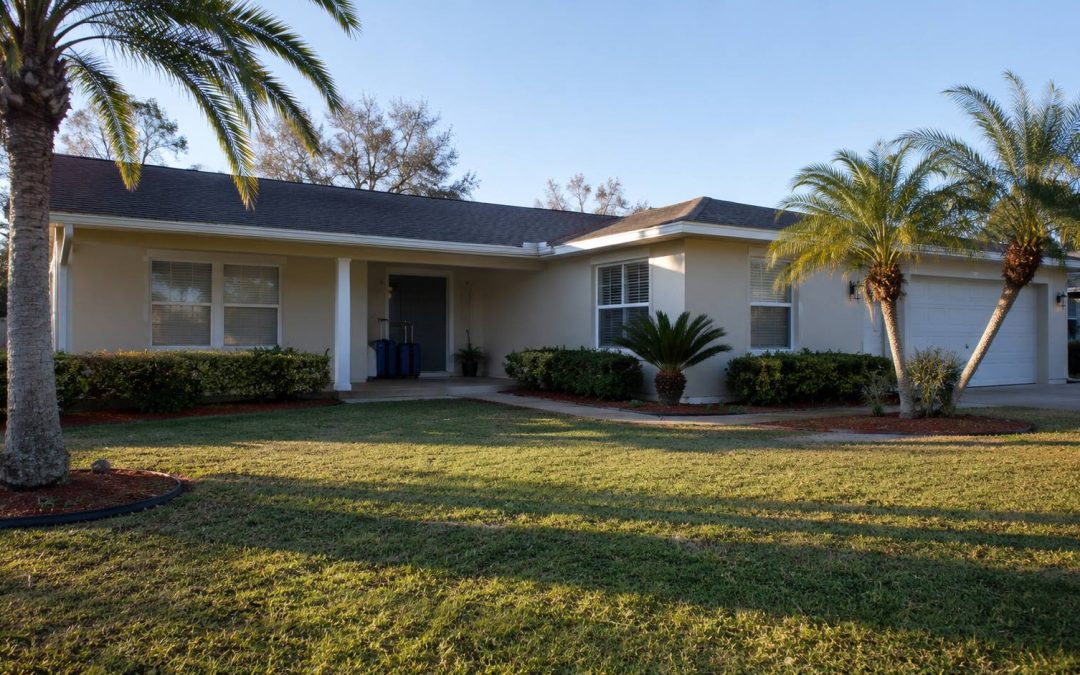
When you leave for the winter, set your AC to auto and hold the house near 60 to 80 degrees. Do not turn it off. That simple range protects your empty Florida home while you are gone.
You lock the door and head off, trusting your home to hold up on its own. That trust is the whole point. You want to come back to the same clean, dry, sound house you left. This page answers the big questions, from the right settings to what your system does in a Florida winter.
What Should I Set My AC To for an Empty House in Winter?
Set the system to auto, with the heat around 60 to 65 degrees. Then set the cooling near 78 to 80 degrees. On auto, your system holds the home in that range without you.
Why a range, and why those numbers? An empty house does not need comfort, so you can let it drift. A lower heat setting, closer to 60, saves energy and still protects the home. Our freeze risk here is low, so you do not need it warm.
The cooling number matters too. On a warm, humid winter afternoon, it lets the system kick on and dry the air. If you are home for part of the season, here is whether it is bad to run the AC when it is cold outside.
How Does Winter Change What My System Does?
In winter, the heating side does most of the work, not the cooling. That flips a few things worth knowing before you leave. The biggest one involves heat pumps.
Most Jacksonville homes run a heat pump. When the temperature drops below the mid 30s, a heat pump leans on backup electric heat. That backup, often called auxiliary or emergency heat, costs more to run. So a high setting during a cold snap can spike the bill in an empty house.
A moderate setting near 60 to 62 avoids that trap. It keeps the home and pipes safe without forcing a lot of costly backup heat. To see how these systems handle our cold spells, read whether heat pumps can handle Jacksonville freezes.
Our hard freezes are rare, but they happen a few nights a year. A steady 60 degrees inside helps keep your pipes from freezing while you are away. That small setting does a big job.
Should I Turn My AC Off While I Am Gone?
No, leave the system on auto. A closed home with everything off invites trouble, even in a mild winter. The system acts as your home’s caretaker while you travel.
Here is the honest picture on mold. Winter air is drier, so mold is less of a threat than in summer. Still, our warm, humid winter days can push indoor moisture up fast. Auto mode handles those days, so you stay protected either way.
Turning it off saves a little money now and risks a big bill later. We go deeper on whether to leave your AC on while you are away. For a months-long trip, on is the safer call.
Will Leaving My System On All Winter Cost a Lot?
Less than you think, and far less than the alternative. On a moderate setting, your system runs only when it truly needs to. In a mild Jacksonville winter, that is not very often.
Now weigh it against the risk. A mold cleanup can cost far more than a whole season of careful use. Water damage to floors, drywall, and furniture climbs higher still. Running the system is the cheaper path by a wide margin.
You can trim the cost even more with a smart thermostat and a fresh filter. Both help the system run at its best. A well-tuned system uses less energy too.
How Do I Keep Humidity and Mold Out of an Empty Home?
Keep the indoor humidity low, and mold cannot take hold. The EPA says to keep it below 60 percent, ideally between 30 and 50. Your AC is what holds that line.
Every time the system runs, it pulls water out of the air. On auto, it cycles on during warm, damp stretches and dries the rooms. That quiet work is your main defense in an empty house.
A smart thermostat makes it easy from far away. You can watch the temperature and humidity from your phone up north. If a number climbs, you fix it before it grows into a problem. Our smart thermostat installation gives you that remote view and real peace of mind.
For a long stay, set a humidity target rather than only a temperature. It tells the system to run based on moisture. That keeps you under the mold line even on a cool, damp day.
What Should I Do Before I Leave for the Winter?
Give your system a little prep so it runs trouble-free while you are gone. Handle these a week or two before you travel. That leaves time to fix anything a checkup turns up.
- Put in a fresh air filter so airflow stays clean for months.
- Clear the drain line so a clog cannot shut the system off.
- Set the thermostat to auto, heat near 60, cooling near 80.
- Close the blinds to block sun and hold the temperature steady.
- Turn ceiling fans off, since no one is home to feel them.
- Ask a neighbor to check in and glance at the thermostat.
A power outage can wipe your settings, so a smart thermostat that alerts your phone helps a lot. The biggest safeguard, though, is a checkup before you go. A maintenance plan keeps your system tuned and catches small problems early. For more on thermostat modes, here is what emergency heat means on your thermostat.
We Are Here Before You Leave for the Winter
Before you leave for the winter, let us make sure your system is ready for the season. We know your home holds a lot of memories, and you want to come back to it safe and sound. That peace of mind is what we are here for.
Our team lives and works right here in Northeast Florida. We can tune up your system, set your thermostat the smart way, and answer any question before you head out. You will deal with real neighbors who treat your home like their own.
Call or text us anytime at (904) 982-9731, or reach out through our contact page. Tell us your travel dates, and we will help you leave with confidence.