
The ideal humidity level for a home is between 40 and 55 percent, but most Florida homes run well above that range, and most homeowners have no idea. High indoor humidity does not just feel sticky and uncomfortable. It actively damages your home, feeds mold growth, makes your AC work harder, and can affect your family’s health over time. In Florida, where outdoor humidity regularly hits 80 to 90 percent, keeping your indoor air in the right range takes real effort.
Here is what the numbers mean, why Florida homes struggle, and how to get your humidity under control.
What Is the Ideal Humidity Level for a Home?
The ideal indoor humidity level sits between 40 and 55 percent. Most HVAC professionals recommend staying at or below 50 percent for comfort and air quality, especially in a humid climate like Florida’s.
Here is a simple breakdown of what different humidity levels mean for your home:
- Below 30%: Too dry. Causes dry skin, irritated sinuses, and static electricity. Wood floors and furniture can crack.
- 30 to 50%: The ideal range. Comfortable, healthy, and low risk for mold growth.
- 50 to 60%: Getting high. Mold can start to grow, and your home will feel warmer than your thermostat reads.
- Above 60%: Dangerous. Mold growth is very likely, dust mites thrive, and moisture can cause real structural damage over time.
Why Is Humidity Harder to Control in Florida?
In most states, keeping indoor humidity in check is fairly simple. In Florida, it requires active management because our outdoor air is already loaded with moisture for most of the year.
Every time a door opens, every time humid air seeps through gaps around windows or doors, moisture enters your home. Your AC system removes some of that moisture as part of the cooling process. However, it can only do so much, especially if it is not running at full capacity or not sized correctly for your home.
Florida homes also tend to leave windows open during mild weather, use ceiling fans instead of AC during cooler months, or set the thermostat fan to ON instead of AUTO. All of these allow humid air to build up without removing it. The result is a home that hovers at 65 to 70 percent humidity even when the temperature feels fine.
Signs Your Indoor Humidity Is Too High
You do not always need a gauge to spot a humidity problem. Watch for these warning signs in your home:
- A musty or earthy smell anywhere in the house
- Condensation or fogging on windows, especially in the morning
- Walls, ceilings, or floors that feel slightly damp
- Mold or dark spots appearing in corners, bathrooms, or near vents
- Your home feeling warmer or stickier than the temperature on your thermostat
- Allergy or sinus symptoms that feel worse when you are indoors
- Warping or buckling in wood floors or furniture
If more than one of these sounds familiar, your indoor humidity is almost certainly above the safe range.
Why Your AC Alone May Not Reach the Ideal Humidity Level
Your air conditioner does remove moisture as part of the cooling process. However, it is not designed to be a dedicated dehumidifier, and in Florida’s climate, it often cannot keep up on its own. There are several reasons for this.
An Oversized AC System
Counterintuitively, an AC that is too big for your home does a worse job controlling humidity. It cools the air too quickly and then shuts off before completing a full dehumidification cycle. Your home feels cooler, but the air stays damp. This is called short-cycling, and it is one of the most common causes of high indoor humidity in Florida homes. For rooms that stay muggy no matter how your central system runs, a ductless mini split can pull moisture out of that space on its own schedule.
Short Run Cycles During Mild Weather
During spring and fall in Florida, temperatures are mild enough that your AC only runs in short bursts. Each run cycle removes some moisture, but short bursts do not remove enough. As a result, humidity climbs even though your home feels cool.
An Aging or Poorly Maintained System
Older AC units lose efficiency over time, including their ability to remove moisture from the air. A system that is 10 to 15 years old may not be dehumidifying nearly as well as it once did. In addition, a system with dirty coils, low refrigerant, or a clogged condensate drain cannot manage moisture effectively regardless of its age.
The EPA’s resource on mold and indoor moisture explains that controlling moisture is the single most effective way to prevent mold growth in your home. Getting your HVAC system in good working order is the foundation of that control.
How To Get Your Home’s Humidity to the Ideal Level
Here are the most effective steps you can take. Start with the basics and work your way up if the problem persists.
Change Your Air Filter
A clogged filter restricts airflow over the evaporator coil. Less airflow means less moisture removal. Changing your filter every 30 days in Florida is a simple and important first step. If your ducts are also full of dust and debris, professional air duct cleaning restores airflow across the whole system.
Set Your Fan to AUTO, Not ON
When your thermostat fan is set to ON, the fan runs constantly, even when the system is not actively cooling. This blows air over a warm coil and re-evaporates moisture back into your home. Set it to AUTO so the fan only runs during cooling cycles.
Run Exhaust Fans
Use bathroom and kitchen exhaust fans during and after showers and cooking. These remove moisture-heavy air directly from your home rather than letting it spread through your living space.
Get Your HVAC System Inspected
Have a technician check your refrigerant levels, coil condition, and condensate drain. All three directly affect how well your system removes moisture. A seasonal HVAC tune-up catches these issues before humidity climbs, and our air quality and HVAC inspection service gives you a clear picture of what your home’s air looks like.
Consider a Whole-Home Dehumidifier
For many Florida homes, a whole-home dehumidifier is the most effective long-term solution. These units work alongside your existing HVAC system to actively pull moisture out of the air, even when the AC is not running. They are especially helpful during mild weather when your AC runs less frequently. Furthermore, they protect your home year-round, not just during peak cooling season.
How To Measure Your Home’s Humidity
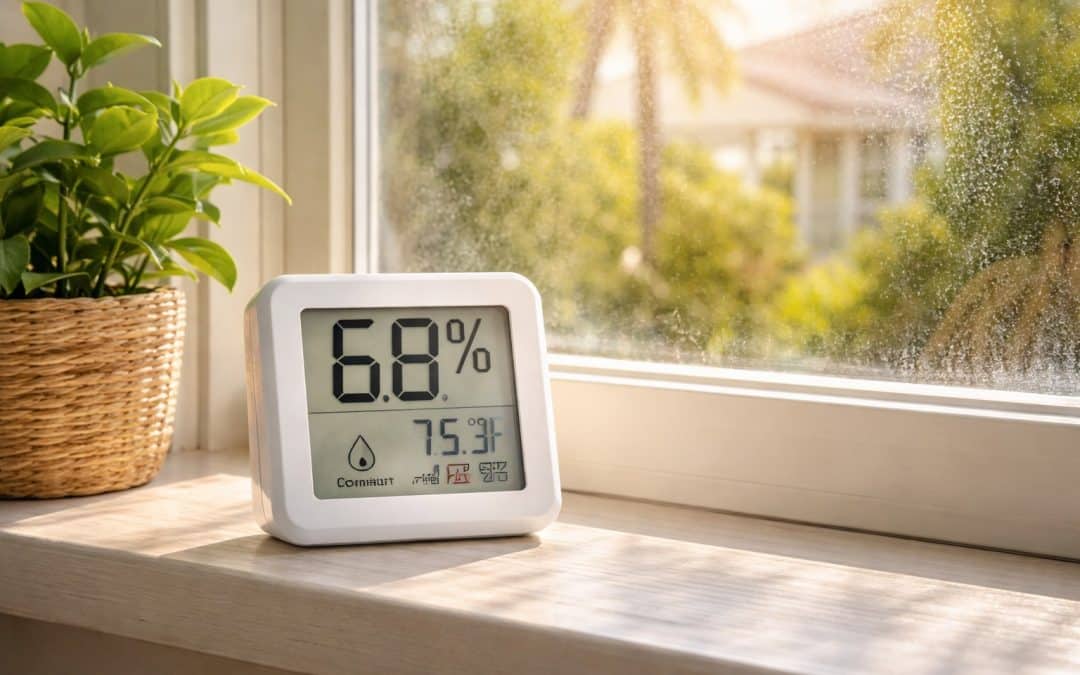
Pick up a digital humidity gauge, also called a hygrometer, at any hardware store. They cost between $10 and $20 and give you a real-time reading of your indoor humidity level. Place it in a central room away from vents or windows for the most accurate reading.
Check it at different times of day and during different weather conditions. If your humidity is consistently above 55 percent, it is time to take action. Above 60 percent, it is urgent.
Get Your Home to the Ideal Humidity Level
Managing humidity in a Florida home is not optional. It directly affects your comfort, your health, your home’s structure, and your electric bill. Getting your indoor air to the ideal humidity level between 40 and 55 percent is one of the most impactful things you can do for your home year-round.
Florida Air Flow provides full HVAC inspections, air quality testing, and whole-home dehumidifier installation throughout Jacksonville, Ponte Vedra, St. Johns, Orange Park, Atlantic Beach, Fernandina Beach, Nocatee, and St. Augustine.
Contact Florida Air Flow today or call (904) 982-9731. If your home feels stuffy, smells musty, or just never quite feels comfortable, we will find exactly what is going on and fix it.