
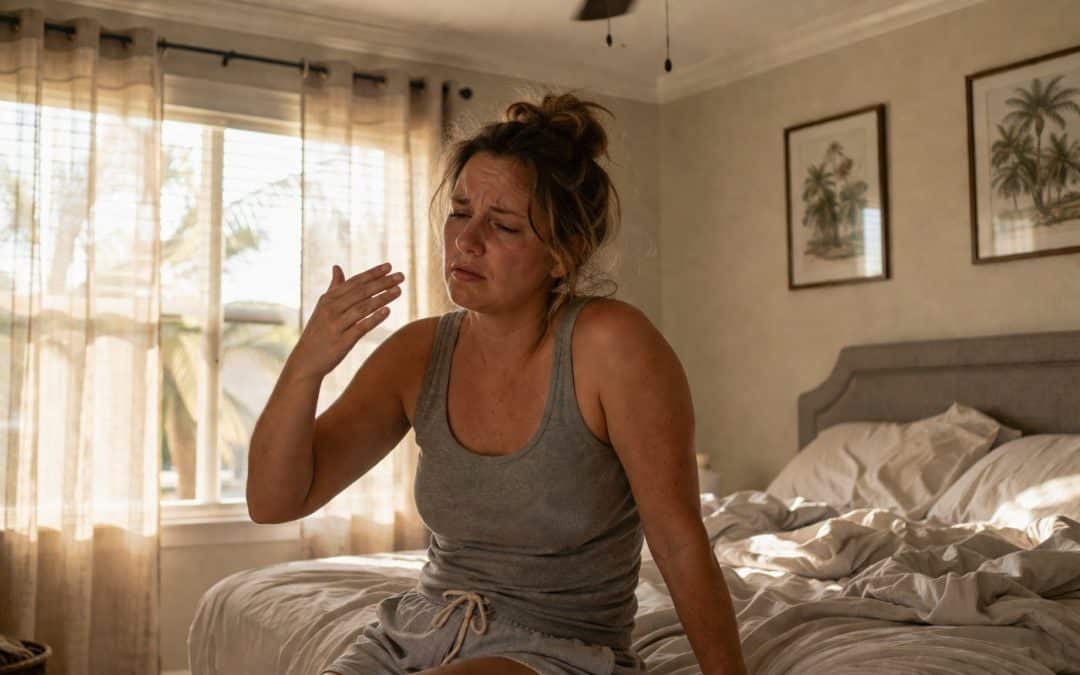
Waking up to a hot house after your AC stopped working overnight is one of the most stressful things a Jacksonville homeowner can deal with. Your system was running perfectly when you went to bed. Now it’s silent, the house is already climbing past 80 degrees, and you have no idea what happened. The good news is that most AC failures like this come down to a handful of causes, and some of them you can check yourself in the next five minutes.
Florida summers put more stress on air conditioning systems than almost anywhere else in the country. When your AC runs for 10 to 12 hours straight through a hot July day, components that were already worn can finally give out after sunset. That’s why this problem is so common in Jacksonville and why homeowners here deal with it far more than people in cooler climates.
What Most Likely Killed Your AC Last Night
Your AC stopped working most likely because the system ran hard all day and a worn component finally hit its limit. In Jacksonville’s heat, air conditioners run almost continuously during summer. That constant strain speeds up wear on electrical parts, especially capacitors, contactors, and drain line components. Here are the six most common reasons this happens:
- Tripped circuit breaker. Your AC draws a lot of power. On a hot day, it draws even more. If the circuit was already close to its limit, the system can trip the breaker after hours of heavy use. This is the first thing to check.
- Failed capacitor. Capacitors are small electrical components that give the motor the jolt it needs to start and keep running. They wear down over time and often fail right after periods of heavy use. A failed capacitor means the outdoor unit goes completely silent.
- Clogged condensate drain line. Your AC pulls moisture out of the air and drains it away. In Florida’s humidity, that drain line can clog fast. Most modern systems have a float switch that shuts the whole system down when the drain pan fills up, which protects your ceiling and floors from water damage.
- Dirty or clogged air filter. A severely restricted filter starves the system of airflow. Over hours of running, this can cause the evaporator coil to freeze or the system to overheat and trip its internal safety switch.
- Refrigerant leak. Low refrigerant forces the system to work harder to cool the home. Eventually, the compressor overheats and shuts down as a safety measure. If your system was struggling to keep up earlier in the day, this could be the cause.
- Thermostat issue. Dead batteries, incorrect settings, or a lost connection can all make it seem like your AC died when the issue is actually with the controls.
Check These 5 Things Before You Call Anyone
When your AC stops working, run through this list before picking up the phone. Some of these take less than two minutes and could save you a service call entirely.
- Check the thermostat first. Make sure it is set to COOL and that the temperature is set below the current room temperature. Check if the display is lit. Dead batteries or a blank screen can make a working system look broken. Replace the batteries and try again.
- Check the circuit breaker. Go to your breaker box and look for a tripped breaker. It will sit between ON and OFF, or flipped fully to OFF. Reset it by pushing firmly to OFF first, then back to ON. Wait two to three minutes and see if the system starts. If it trips again right away, stop resetting it. A breaker that keeps tripping signals a deeper electrical issue that needs a tech.
- Check the air filter. Pull the filter and look at it. If it is gray, packed with dust, or fully blocked, replace it immediately. A severely clogged filter can cause the system to freeze up or overheat and shut itself off.
- Check the drain pan. Find your indoor air handler, usually in a closet, attic, or utility room. Look underneath for the drain pan. If it is full of water, the drain line is clogged and the float switch shut the system down to prevent overflow. You can try clearing the line with a wet vac. If you are not sure how, call a tech.
- Check the outdoor unit. Go outside and look at the condenser unit. Is it running? If the indoor air handler is on but the outdoor unit is completely silent, you likely have a capacitor failure or a refrigerant issue. Both need a professional.
If you work through all five checks and still cannot find the issue, it is time to call for professional AC repair service. At that point, the problem is inside the system and needs diagnostic tools to identify correctly.
Why Florida’s Heat Makes This So Much Worse
Jacksonville summers regularly push outdoor temperatures into the low 90s with high humidity, which means your system almost never gets a break. The U.S. Department of Energy notes that electrical connection failures and worn capacitors are among the most common causes of AC shutdowns, and both get worse when a system runs under heavy load for hours at a time.
Capacitors are especially vulnerable to heat. They sit inside the outdoor unit, which absorbs direct Florida sun all day. As they age, that heat gradually breaks them down until they fail. Most homeowners never know there is a problem until the system goes quiet after a long summer day of running.
Furthermore, refrigerant leaks tend to show up first during summer. Low refrigerant forces the compressor to work harder to compensate. Over hours of heavy use, that extra strain can push the compressor to its limit and trigger an automatic shutoff. If your system was struggling to cool the house earlier in the day, a refrigerant leak is worth checking.
Should You Try to Restart It Yourself?
You can try a restart once, but do it the right way. First, turn the thermostat to OFF. Then go to the breaker box and flip the AC breaker off. Wait a full 30 minutes (not five minutes, not ten). This gives the compressor time to equalize pressure and reset properly. After 30 minutes, flip the breaker back on, wait five more minutes, then set the thermostat back to COOL.
If the system starts and runs normally, watch it for the next hour. If it stops again, do not keep restarting it. Repeated restarts without fixing the underlying problem can damage the compressor, which is one of the most expensive components in the entire system. One restart attempt is reasonable. Multiple forced restarts cause more damage.
If you notice any of these signs when you try to restart, shut the system off and call a tech right away:
- A burning smell from the indoor or outdoor unit
- Loud grinding, clanking, or buzzing from the outdoor unit
- Ice or frost on the indoor unit or refrigerant lines
- The breaker trips again within minutes of resetting
- Water dripping from the ceiling near a vent or air handler
When Should You Actually Be Worried?
Most AC failures are urgent but not immediately dangerous for healthy adults. However, some situations need faster action. Call for emergency AC service right away if anyone in your home is elderly, very young, or has a medical condition that makes heat dangerous. Indoor temperatures above 90 degrees become a health risk quickly in a Florida summer.
While you wait for a technician, close blinds and curtains to block out the morning sun. Move to the lowest floor of your home, where it stays cooler longer. Use fans to keep air moving. If the temperature climbs past 90 degrees and you cannot get service quickly, consider spending a few hours somewhere with air conditioning while the repair is being scheduled.
If none of the basic checks above point to a clear cause, you are most likely dealing with a capacitor failure, a failed contactor, or a refrigerant issue. All three are same-day repairs in most cases when you call early. Also, if your system showed signs of short cycling before it stopped, those two problems are often connected. Read more about why Jacksonville AC units keep restarting to see if that pattern fits your situation.
How Do You Keep This From Happening Again?
The best way to stop an AC failure before it happens is to catch worn components early. Most capacitor failures, clogged drain lines, and refrigerant issues show warning signs weeks before the system finally stops. A professional tune-up before summer gives a technician the chance to find and fix those problems while they are still small.
Beyond annual maintenance, here are a few things you can do right now:
- Change your air filter every 30 to 60 days during Jacksonville’s cooling season. The national average of 90 days does not apply here.
- Keep the area around your outdoor unit clear of grass, shrubs, and debris. Restricted airflow to the condenser is a leading cause of overheating and component failure.
- Check your condensate drain line once a month during summer. Pouring a cup of distilled white vinegar into the drain access port helps prevent algae buildup and clogs.
- Pay attention to how your system sounds and performs. A unit that takes longer to cool the house, runs constantly, or makes new noises is giving you a warning before it stops completely.
If your AC stopped working and the basic checks did not reveal the problem, the Florida Air Flow team is ready 24 hours a day, seven days a week for same-day AC repair across Jacksonville, Ponte Vedra, Orange Park, St. Johns, and surrounding areas. Contact us today to schedule your service call and get your home cooling again fast.