
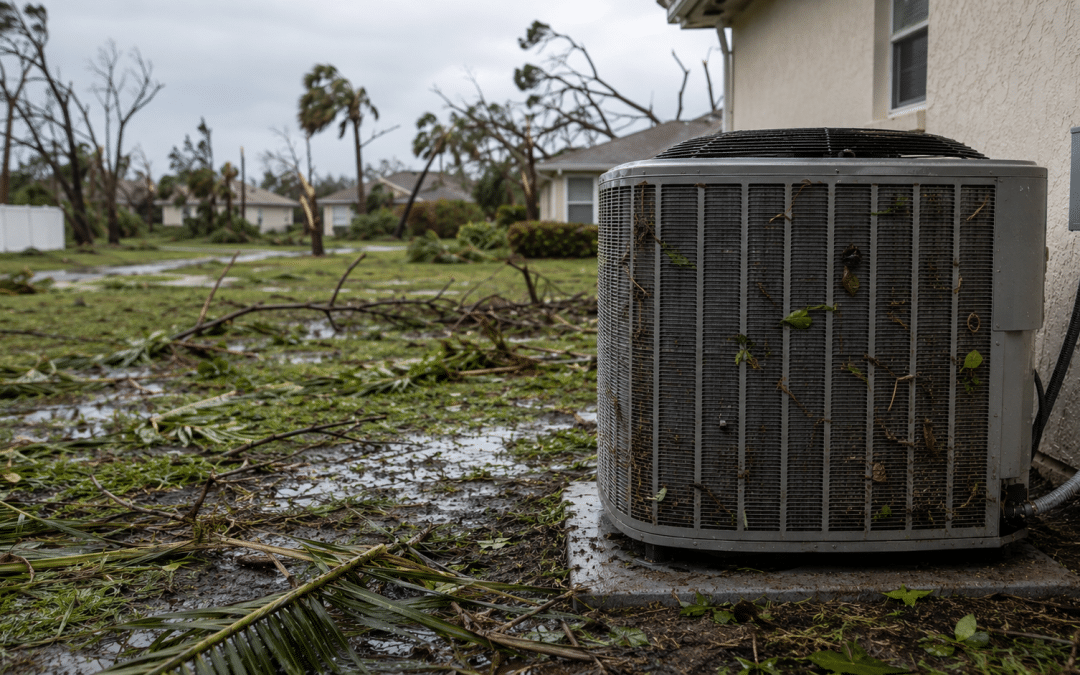
Wondering if your homeowners insurance covers AC damage from a hurricane in Florida? The short answer is yes, but there are some big catches every Jacksonville homeowner and small business owner needs to know about before filing a claim. We put this guide together in plain language so you know what’s covered, what isn’t, and exactly what to do the morning after a storm.
Does Homeowners Insurance Cover HVAC Damage From a Hurricane?
Yes, most standard Florida homeowners policies cover HVAC damage from a hurricane, but only when the damage comes from a “covered peril” like high winds or flying debris. Your central AC usually falls under the dwelling coverage part of your policy since it counts as part of your home’s structure. Window units and portable ACs fall under personal property coverage, which works a little differently.
Here’s the plain-English rule of thumb. If a hurricane sends a palm frond through your condenser fins, your insurance usually pays. If your 14-year-old system finally gives up during the storm because a capacitor was on its last legs, that’s on you.
What Your Policy Usually Covers on Your AC
Most Florida homeowners policies step in to help pay for AC repair or replacement when the damage comes from one of these situations:
- Wind damage from a hurricane or tropical storm
- Flying debris hitting your outdoor condenser
- A tree falling on your unit
- Fire, including a house fire that damages the air handler
- Lightning strikes
- Vandalism or theft (yes, condenser thefts do happen in Jacksonville)
What your policy will not cover is the stuff most people assume it does. Normal wear and tear, breakdowns from skipped maintenance, refrigerant leaks that built up over years, or damage from a landscaper who bumped your unit with a mower all fall on you. If you’re not sure whether your AC problem came from the storm or from age, our guide on how to tell if your AC has salt damage or is just getting old walks you through the difference.
Does Insurance Cover AC Damage From a Power Surge?
Most Florida homeowners policies do not cover pure power surge damage to your AC unless the surge caused a fire or came directly from a lightning strike. This trips up more Jacksonville homeowners than any other part of hurricane season, because power surges are one of the most common ways ACs die during a storm.
When the power goes out and then comes roaring back, that surge can fry your compressor or control board. If lightning caused it, your insurance usually pays. If it was a regular grid surge, your insurance company will likely deny the claim. This is why so many local families are asking about whole-house surge protectors these days. They run roughly a few hundred dollars installed, and they can save you thousands.
Does Homeowners Insurance Cover Flood Damage to My Air Conditioner?
No, standard Florida homeowners insurance does not cover flood damage to your air conditioner, even during a hurricane. This is one of the biggest and most painful surprises Florida homeowners run into after a storm.
Here’s the tricky part. If wind blew rain through your roof and it dripped down onto your air handler in the attic, that usually counts as wind-driven damage and your policy pays. If storm surge or rising floodwater soaked your outdoor condenser, that’s flood damage, and you need a separate flood insurance policy for it. The National Flood Insurance Program offers policies for both homeowners and renters, but there’s a 30-day waiting period, so you cannot buy it once a storm is on the way.
What Happens If a Tree Falls on My AC Unit?
If a tree falls on your AC unit during a hurricane, your homeowners insurance will usually cover the damage, plus the cost of removing the tree. This holds true whether the tree came from your own yard or a neighbor’s. Your policy covers your property, so you file the claim with your own insurance company.
There is one big exception. If the tree was clearly dead, decayed, or leaning dangerously before the storm and you never had it addressed, your insurance company can push back or deny the claim. That’s why a walk around your yard before hurricane season matters. If you have a tree leaning over your condenser today, that’s a problem worth solving now, not after the next storm.
How Does a Hurricane Deductible Work in Florida?
Your hurricane deductible in Florida is a percentage of your home’s insured value, not a flat dollar amount like your regular deductible. It typically runs between 2% and 10% of your dwelling coverage, and it kicks in when the National Weather Service declares a hurricane watch or warning for your area.
Here’s what that looks like in real life. If you carry a few hundred thousand dollars in dwelling coverage and your policy has a 2% hurricane deductible, you could be on the hook for several thousand dollars before your insurance starts paying. That’s a big number, especially if the AC repair itself would only run a few thousand. In some cases, the damage costs less than your deductible, and it makes more sense to pay out of pocket than to file a claim.
This is where a quick call to a trusted local HVAC pro matters. We can give you an honest estimate first, so you know whether a claim makes sense or whether you should just fix it. If your AC needs immediate help, our 24-hour emergency AC repair team is available any time, day or night.
The Older AC Problem Nobody Warns You About
If your AC is older, your insurance may not pay you enough to fully replace it, even when your insurer approves the claim. Insurance companies call this “actual cash value” (ACV) coverage, and it means they subtract depreciation from what they pay out.
Say a fallen tree crushes your 12-year-old condenser during a storm. A new AC replacement in Jacksonville can run in the ballpark of several thousand dollars, with higher-end systems pushing well past ten thousand. Under ACV coverage, your insurance company may only cut a check for a fraction of that. “Replacement cost” coverage pays the full amount, but not every policy includes it. Before hurricane season, check your policy or ask your agent which one you have. If your AC is more than ten years old and your policy uses ACV, you’ll likely pay a good chunk out of pocket even on a covered claim.
How Do I File an Insurance Claim for Hurricane AC Damage?
File your hurricane AC damage claim by taking clear photos and video of the damage, calling your insurance company as soon as it’s safe, and getting a written estimate from a licensed HVAC contractor. Move fast, because insurance companies process claims on a first-come basis after major storms.
Here’s the order of operations we walk our Jacksonville neighbors through the morning after a hurricane:
- Safety first. Do not touch the outdoor unit if there are downed power lines or standing water anywhere near it.
- Take photos and video. Shoot from every angle, including the data plate with the model and serial number. This is your evidence.
- Call your insurance company. Get a claim number and ask what your hurricane deductible is if you don’t already know.
- Call a licensed HVAC contractor. A pro can tell you what’s actually damaged, what it will cost, and whether the damage came from the storm or from age. Insurance adjusters take these reports seriously.
- Do not throw anything out. Save broken parts and debris as evidence for the adjuster.
- Do not schedule permanent repairs yet. Get the adjuster’s approval first, unless you need to prevent further damage.
If you’d rather not roll the dice on age-related damage in the middle of hurricane season, our post on how to hurricane-proof your AC covers the prep work that saves the biggest headaches down the road.
A Quick Note for Jacksonville Small Business Owners
Commercial property insurance follows most of the same rules as homeowners insurance for hurricane damage to your AC. If you own a Jacksonville shop, office, restaurant, or rental property, the wind vs. flood distinction still applies, and so does your hurricane deductible. The bigger difference is business interruption coverage. When your AC dies for a week during peak summer, you could lose customers, spoil inventory, or lose rental income. Check whether your policy covers those losses too, because rebuilding foot traffic can be harder than replacing the unit itself.
Have Storm Damage or Questions? We’re Here for You.
Whether your AC took a direct hit from a hurricane or you’re just not sure what happened, we’re happy to come take a look, give you an honest estimate, and help you decide if a claim makes sense. Call us anytime at (904) 982-9731 or reach out through our contact page. Florida Air Flow is available 24/7, and we’ve helped Jacksonville families through plenty of storm seasons. We’ll always tell you the truth about your AC, whether that means a quick fix, a claim, or something in between.